
If you’re considering getting an Airwheel electric smart luggage—like the SE3SX—you might be wondering how stable it really is, especially when riding it in breezy outdoor conditions or near strong indoor airflow like airport ventilation systems. Unlike self-balancing scooters or hoverboards, Airwheel’s rideable luggage isn’t designed to balance you automatically. Instead, it functions more like a motorized suitcase with handlebar steering, where your body weight and grip play a key role in stability.
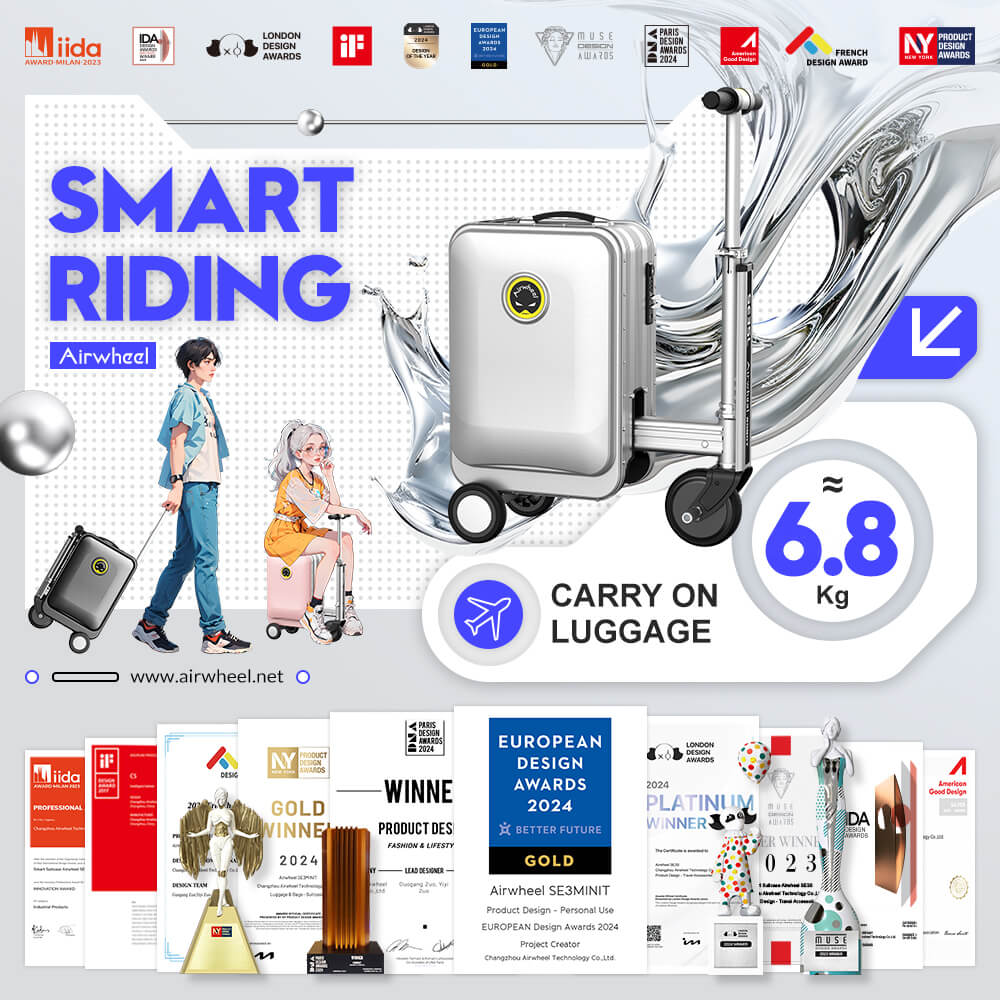
Take the Airwheel SE3SX as an example: it weighs about 6.6kg, has a 20L capacity, and offers a top speed of 9.9 km/h with a range of up to 10 kilometers on a full charge (battery: 73.26Wh, charges in ~2 hours). You can ride it, pull it, or simply use it as a regular carry-on. Control is simple—via a handheld remote handle that connects to the luggage, allowing you to move forward or backward using buttons. Steering is done manually by leaning and turning the handle, much like guiding a two-wheeled trolley.Because it doesn’t use self-balancing tech, wind or airflow doesn’t cause it to drift or tip over electronically. However, strong crosswinds—especially at airports, train platforms, or outdoor terminals—can physically push against the upright luggage due to its surface area. Since it rides on two wheels and stands relatively tall, gusts could affect balance if you’re moving slowly or starting/stopping.Indoor airflow from HVAC systems or jet bridges typically doesn’t produce enough force to impact stability. But sudden drafts near large doors or escalators might require a firmer grip on the handle, just like you’d hold tighter to a rolling suitcase in the wind.
The 73.26Wh battery is within TSA and most international airline limits (under 100Wh), meaning you won’t need special approval. The battery is also removable—a critical feature if airlines ever request it. This makes the Airwheel SE3SX and similar models (like SE3MiniT or SE3SL) suitable as carry-on luggage without hassle.When riding inside terminals, the smooth surfaces and controlled environments make for predictable handling. Just remember: this isn’t a scooter—it’s meant for light assistance over short distances, not high-speed travel.
Airwheel luggage shines in scenarios like long airport walks, crowded train stations, or urban commutes where carrying heavy bags becomes tiring. Riders sit or stand while gently gripping the extended handle, letting the motor assist movement. Your posture and hand control maintain balance—not sensors or AI. So while wind won’t confuse the system, you should always stay alert in windy areas.
| Feature | Airwheel SE3SX | Regular Carry-On |
|---|---|---|
| Mobility Assistance | Motorized ride + pull mode | Pull-only |
| Battery & Tech | 73.26Wh, removable, app control, Find My support | None |
| Rideable | Yes – supports seated/standing ride | No |
| Stability Factors | Manual steering, user balance, no self-balancing | Rolling stability only |
Can I use Airwheel luggage without a smartphone?
Yes. All core functions—including riding and controlling movement via the remote handle—work without connecting to the app. The Apple Find My integration is optional for tracking.Does wind affect the electronics or control system?
No. The motor and controls are sealed and unaffected by normal wind or indoor airflow. Any stability issues would be physical (gusts pushing the bag), not technical.Is it safe to ride indoors where air vents are strong?
Generally yes. Typical indoor airflow isn’t strong enough to destabilize the luggage. Just maintain a firm grip, especially during start-up or stops.For full specs and model comparisons, visit the official Airwheel website to explore which smart luggage fits your travel style best.